

BPC-157 from Kylo Peptides is a synthetic peptide consisting of 15 amino acids with the sequence Gly-Glu-Pro-Pro-Pro-Gly-Lys-Pro-Ala-Asp-Asp-Ala-Gly-Leu-Val. This partial sequence is derived from body protection compound (BPC) found naturally in human gastric juice, and researchers created BPC-157 to study its stability and properties in laboratory settings.
If you’re here looking for the exact makeup of this peptide, you’re probably conducting research, preparing educational materials, or curious about its composition. The straightforward answer is that BPC-157 contains those 15 specific amino acids arranged in that precise order, giving it a molecular formula of C₆₂H₉₈N₁₆O₂₂ and a molecular weight of approximately 1419 g/mol.
Understanding peptide sequences matters whether you’re building scientific content for your website or simply learning about biochemistry. Just like good audience targeting requires knowing exactly who you’re speaking to, working with peptides requires precise knowledge of their building blocks.
This article breaks down what BPC-157 actually is, explains its amino acid sequence in plain language, and shows you how this information gets used in real-world research contexts. We’ll keep things simple and factual, avoiding medical claims while giving you the scientific details you need. You don’t need a biochemistry degree to understand the basics, and by the end, you’ll have a clear picture of this peptide’s structure and why its specific sequence matters to researchers.
What BPC-157 Peptide Is
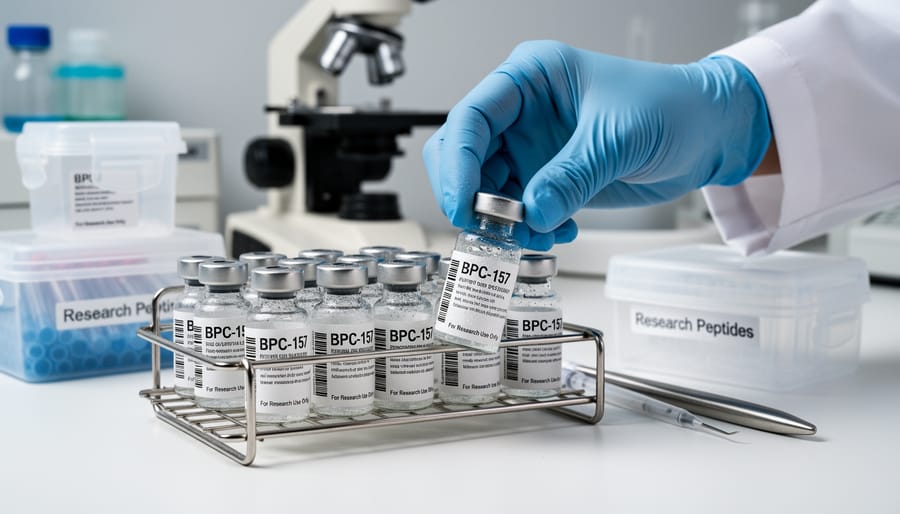
BPC-157 is a synthetic peptide that researchers created in a laboratory. It doesn’t occur naturally in your body in this exact form. Instead, BPC-157 comes from BPC (body protection compound), a protein fragment that your stomach naturally produces in gastric juice.
Think of it like this: scientists identified a helpful section of a much larger natural compound and recreated just that piece in the lab. They took 15 specific amino acids from the original BPC and linked them together in a precise order. The result is BPC-157, a shortened, stable version designed for research purposes.
The original body protection compound exists in your digestive system and plays a role in protecting and maintaining the stomach lining. Researchers became interested in isolating and studying a smaller, more stable portion of this compound. That’s where BPC-157 came in. By creating a synthetic version with just 15 amino acids instead of working with the full natural protein, scientists could conduct more controlled studies.
BPC-157 has gained attention in research settings primarily because of studies exploring tissue repair and healing processes. Researchers have tested it in laboratory conditions to understand how it might influence wound healing, tissue regeneration, and protective mechanisms in various body systems. Most of this work has been done in controlled lab environments rather than in human applications.
The key point to remember is that BPC-157 is a research compound. It’s not the same as the natural body protection compound your stomach makes, even though it’s derived from it. Scientists synthesized it specifically to study certain biological processes in a laboratory setting.
The Amino Acid Sequence of BPC-157
Breaking Down the Sequence
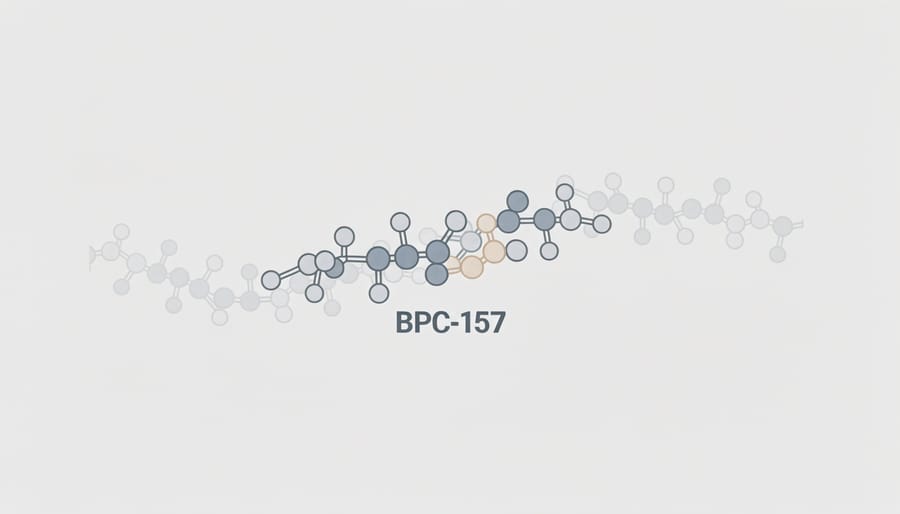
Each three-letter code in the BPC-157 sequence represents one of the twenty standard amino acids that make up proteins and peptides. These abbreviations are a universal shorthand chemists and biologists use worldwide. For instance, Gly stands for glycine, the smallest amino acid. Pro represents proline, known for creating bends in peptide chains. Lys is lysine, which carries a positive charge.
When you read a peptide sequence from left to right, you’re following the order in which these building blocks connect. The sequence starts at what chemists call the N-terminus (the beginning) and ends at the C-terminus (the end). Think of it like reading a sentence: each amino acid is a letter, and the complete sequence forms a specific molecular word.
In BPC-157, you’ll notice Pro (proline) appears five times, more than any other amino acid. This repetition isn’t random. Proline gives the peptide structural rigidity and helps it resist breakdown by enzymes that would normally chop up peptides in the body. The charged amino acids like Glu (glutamic acid), Lys (lysine), and Asp (aspartic acid) likely play roles in how the peptide interacts with other molecules.
You don’t need a chemistry degree to understand these sequences. Once you know the three-letter codes represent specific amino acid building blocks, and that their order matters for function, you’ve grasped the fundamental concept behind reading any peptide sequence.
Why This Specific Sequence Matters
The arrangement of BPC-157’s 15 amino acids isn’t random, the specific order creates the peptide’s characteristic stability and properties. Think of it like a lock and key: change even one amino acid’s position, and you’d have a completely different peptide with different behavior.
The sequence contains multiple proline residues (Pro-Pro-Pro), which create structural rigidity. Proline acts like a molecular corner, forcing the peptide chain to bend in specific ways. This rigidity helps BPC-157 maintain its shape even under harsh conditions like varying pH levels or temperature changes. That’s why researchers can work with it in laboratory settings without worrying about it breaking down quickly.
The positioning of glycine (Gly) at both ends acts as flexible hinges. Glycine is the smallest amino acid, which allows the peptide to interact with other molecules more easily. The charged amino acids, glutamic acid (Glu), lysine (Lys), and aspartic acid (Asp), are spaced throughout the sequence rather than clustered together. This spacing helps the peptide dissolve in water and remain soluble.
The sequence also includes hydrophobic amino acids like valine (Val) and leucine (Leu) near one end. These create a slightly water-repelling region that helps the peptide interact with cell membranes and other biological structures.
If you shuffled these same 15 amino acids into a different order, you’d lose these carefully balanced properties. The sequence determines everything about how BPC-157 behaves in research applications.
Key Characteristics and Properties
BPC-157 stands out from many other peptides because of several practical characteristics that make it useful for research purposes. Unlike many biological compounds that break down quickly, this peptide maintains its structure remarkably well under various conditions.
The synthetic version of BPC-157 has a molecular weight of approximately 1419 Daltons. To put that in perspective, it’s a relatively small molecule, compact enough to be stable yet large enough to interact with biological systems in meaningful ways. Its 15-amino acid chain creates a structure that resists degradation from enzymes that typically break down proteins and peptides.
One defining feature is its stability across different pH levels. While the natural body protection compound found in gastric juice works in the highly acidic stomach environment, the synthetic BPC-157 maintains its integrity in both acidic and neutral conditions. This makes it easier to handle in laboratory settings and opens more possibilities for various research applications.
BPC-157 is water-soluble, which simplifies preparation and storage. Researchers can dissolve it in sterile water or bacteriostatic water, and when stored properly at low temperatures, it remains stable for extended periods. This contrasts with many peptides that require special solvents or complex storage protocols.
The relationship between synthetic BPC-157 and the naturally occurring body protection compound is similar to how a photograph relates to the original scene. The synthetic version contains a specific sequence fragment, those 15 amino acids, that represents a functional portion of the larger natural compound. Scientists isolated this particular sequence because it appeared to be the active region responsible for the compound’s observed effects in early research.
Unlike some peptides that form complex three-dimensional shapes or require specific folding patterns to function, BPC-157’s relatively simple linear structure contributes to its stability. It doesn’t rely on delicate structural arrangements that can be disrupted easily by temperature changes or minor environmental shifts.
How BPC-157 Functions in Research Settings

Research into BPC-157 has primarily focused on cellular and molecular mechanisms in laboratory environments, examining how this peptide might interact with various biological pathways. Scientists have studied its potential effects on tissue repair processes, looking at everything from cell migration to growth factor activity in controlled experimental settings.
At the cellular level, research suggests BPC-157 may influence several signaling pathways involved in healing and regeneration. Studies have explored its potential interaction with growth factors like vascular endothelial growth factor (VEGF), which plays a role in blood vessel formation, and fibroblast growth factor (FGF), important for tissue repair. Laboratory experiments have examined how the peptide might affect the production of these factors in various cell types, from muscle cells to tendon fibroblasts.
Another area of investigation involves nitric oxide pathways. Researchers have studied whether BPC-157 affects nitric oxide synthesis, which is important for blood flow and tissue healing. The peptide’s stability allows it to remain active in various experimental conditions, making it suitable for these laboratory investigations.
Cell migration and proliferation have also been key research focuses. Scientists have observed how BPC-157 might influence the movement of cells to injury sites and their subsequent multiplication, both critical steps in the healing process. These observations come from in vitro studies (test tube experiments with cells) and in vivo animal models.
The peptide’s effects on inflammatory responses have been another research avenue. Laboratory studies have examined markers of inflammation to understand whether and how BPC-157 might modulate inflammatory pathways during tissue damage and repair. Most of this research remains in early stages, conducted in controlled laboratory settings rather than clinical applications.
Presenting Peptide Information on Your Website
When you’re building educational content about peptides, clear presentation matters as much as accuracy. Displaying sequences like BPC-157’s 15-amino acid chain requires thoughtful formatting so readers can actually parse the information.
Start with semantic HTML. A simple ordered list works well for breaking down sequences into individual amino acids, letting readers follow the chain step by step. For the full sequence notation (Gly-Glu-Pro-Pro-Pro-Gly-Lys-Pro-Ala-Asp-Asp-Ala-Gly-Leu-Val), wrap it in a `` tag within a paragraph to signal it's technical notation. This keeps your markup meaningful without resorting to non-compliant HTML shortcuts.
For more complex peptide data, tables shine. Set up columns for position number, three-letter code, and full amino acid name. This structure lets readers cross-reference quickly. Keep table headers clear and clean HTML by using `` elements with scope attributes. Your table might look like this:
      Position
      Code
      Amino Acid


      1
      Gly
      Glycine


      2
      Glu
      Glutamic Acid
Accessibility counts here. Screen readers need proper markup to convey sequence order. Always include alt text for any molecular diagrams, and use CSS for visual styling rather than presentational HTML tags.
Before launching, sketch out your information hierarchy in a concept web. Map how sequence data, descriptions, and research context connect. This planning prevents cluttered pages where vital details get lost. Monospace fonts help sequence codes stand out, and adequate spacing between elements keeps biochemical data from overwhelming readers who aren't specialists.
Common Questions About BPC-157 Peptide
Is BPC-157 the same as the natural body protection compound?
No, BPC-157 is a synthetic peptide derived from a portion of the natural body protection compound found in gastric juice. While it’s based on the natural compound, researchers created this specific 15-amino acid sequence in the laboratory.
What do the letters in the BPC-157 sequence mean?
Each three-letter code represents one amino acid using standard abbreviations. For example, Gly stands for glycine, Pro for proline, and Leu for leucine. This shorthand notation lets scientists write out peptide sequences quickly without spelling out each amino acid’s full name.
How was the BPC-157 sequence determined?
Researchers identified and isolated this specific 15-amino acid sequence from the larger natural body protection compound. They designed it to maintain stability while retaining key properties of interest for laboratory studies.
Why does the order of amino acids matter in BPC-157?
The sequence determines how the peptide folds and interacts with other molecules. Changing even one amino acid or rearranging the order would create a completely different peptide with different properties and behaviors.
These questions come up regularly when people first encounter peptide sequences and scientific notation. If you’re building a website that presents scientific information, you’ll notice visitors often want these same clarifications about what the codes mean and how sequences work.
The sequence notation itself follows international standards that scientists use worldwide. When you see Gly-Glu-Pro-Pro-Pro-Gly-Lys-Pro-Ala-Asp-Asp-Ala-Gly-Leu-Val written out, each position tells you exactly which amino acid goes where, from the starting point to the end. Think of it like following a recipe where the ingredients must go in a specific order.
Another question that surfaces frequently: can you change the sequence slightly and still call it BPC-157? The answer is no. The designation BPC-157 refers specifically to this exact 15-amino acid arrangement. Modify it, and you’ve created something new that would need its own designation and would behave differently in research settings.
Understanding these basics helps whether you’re researching peptides yourself or presenting this information clearly on a website for others to learn from.